 After watching 2 hours of constructive, informed, substantive, and sometimes even juicy debate in the Senate Environment & Public Works Committee last week, I am elated that toxic chemicals reform is finally on the agenda in Congress. It's not there because of special interest lobbying or industry pay-backs, but because everyday folks (like you and me!) have been badgering Congress so persistently to do something about this toxic chemicals mess, that they are finally getting the message.
The Toxic Substances Control Act (TSCA) is the federal law that covers the chemicals that saturate our every-day lives as ingredients in almost every consumer product you can name. With more than 80,000 chemicals on the market and less than 200 tested for safety, it’s no wonder that TSCA is widely considered to be a complete failure.
Sen Frank Lautenberg (D-NJ) has introduced the Safe Chemicals Act of 2011 to fix TSCA’s problems and give the American people an assurance of safety when products like baby bottles and household cleaners are put on the market. He facilitated a lively bipartisan discussion that covered everything from the EPA’s jurisdiction to the “body burden” of 212 industrial chemicals in Senator Udall’s body.
Five expert witnesses testified to the committee (you can read their testimonies and watch the archived video here). Watching the hearing, it became clear that all the stakeholders are at the table, and that one - the chemical manufacturers - are dragging their feet. One Senator after the next grilled the American Chemistry Council and asked them to stop criticizing from the sidelines, roll up their sleeves and get to work fixing TSCA, if they are sincere in their assertions that it needs to be fixed. Another key industry player, the Consumer Specialty Products Association, representing the likes of Johnson & Johnson and Proctor & Gamble, is clearly doing just that. The CSPA and the environmental health folks in the hearing room agreed that they are “on the cusp” of agreeing to solutions for all the sticky points they identified in the hearing.
Next stop: "Markup," which is inside-the-beltway language for all the stakeholders getting out their red pens and working with Senate staff to make detailed edits to the bill so that the committee can vote on actual changes. After the hearing, Senator Lautenberg reiterated his intention to bring the Safe Chemicals Act to a vote before the year is out.
Now that the ball is finally moving down the field, we all need to make sure that our Senators understand how important chemical reform is to our health and our economic future. Moms like me have kept up a steady drumbeat that has put safer chemicals on Congress’s to-do list. Our job now is to make sure that they get it done.
It was a great feeling last week to watch the Senate seriously debating an issue so important to our health and our future. This week as I give thanks with my family for our many blessings, I’ll also be giving thanks for all of you who are working together for a healthier world for our children.
Monday, November 21, 2011
Congress finally gets to work on chemical reform

Tuesday, September 27, 2011
Thursday, April 15, 2010
not all germs are bad
Guest post by Toxic Free NC volunteer Andrea Restle-Lay, Moderator of Five Points of Raleigh CSA
Not all germs are our friends, it’s true, and they can turn into true enemies. It’s no wonder H1N1 swept us all into a panic!
I’ve heard lots of stories over the years: a neighbor has MS; my high school friend has celiac disease (a.k.a. gluten allergy); friends and relatives die of cancer; schoolmates started suffering sudden, life threatening peanut allergies and asthma; my own son picked up a cold which turned into an odd, barking cough that went on forever and was impervious to medications. My own research has shown that all these issues may be related to hyper-immunity, or the body’s immune system turning against itself. But why? What is wrong with everyone’s immune system all of a sudden?
One explanation comes from the Hygiene Hypothesis, developed after a failed experiment in Germany in the late 1990s. Dr. Erika Von Mutius hypothesized that children who grew up in poorer East Germany would be more likely to have asthma and allergies than those in wealthier West Germany. In fact, after reunification she discovered that exactly the opposite was true – children in East Germany were less likely to have asthma and allergies! So she developed a new theory – the hygiene hypothesis - that a child’s early contact with dirt, animals and other children exposes them to many microbes and allergens, and this helps their immune systems develop strong and healthy.
There has been much debate in the scientific literature since that time about the validity of this idea, and how exactly it works. There is such a thing as a good germ – in fact, there are billions of good bacteria at work in all of us, helping us to digest our food properly, heal from skin wounds, and more. Overdoing it on the antibacterial soaps, cleaners and sanitizers, not to mention antibiotics, may kill off too much good bacteria and throw our bodies out of whack. What’s more, antibacterial ingredients added to many household products are actually pesticides, with toxic effects on our health and on the environment. More about that in a previous blog post.
Opponents of the hygiene hypothesis point to inner-city populations in the US. Living in more crowded housing and spending more time in daycare should mean higher exposure to germs and lower risk of asthma and allergies for inner-city kids, right? But no, rates of asthma are in fact much higher than for other American children. However, inner-city kids may also face a lot of other exposures that increase their risk for respiratory illnesses – things like diesel exhaust, industrial pollution, and pesticides. Diet may also play a big role.
Some good sources to check out on this issue include:
Jessica Sachs’ Good Germs, Bad Germs: Health and Survival in a Bacterial World
Dirt’s good for kids from the Chicago Tribune
So what can we do as parents to raise healthy children free of immune diseases AND the flu?
- Educate your children’s immune system every day by exposing your children to plenty of environmental nuances - (non-poisonous) backyard plants and flowers, fields of weeds and wildflowers, get a kiss from a neighbor’s well-behaved dog, investigate some bugs, pick up some earthworms. Feed your kids local honey every day after they reach one year of age. Let them get dirty and make mud pies in the backyard.
- Wait to serve solid food until six months. Start with low allergy risk foods like sweet potatoes, oatmeal and apples but avoid things like eggs and nuts early on.
- Flood those little bodies with healthy antioxidants to help their immune systems remain strong, especially after a cold or vaccination when young immune systems are most likely to overreact. A delicious organic berry and local honey yogurt smoothie or even chicken vegetable soup can do the trick!
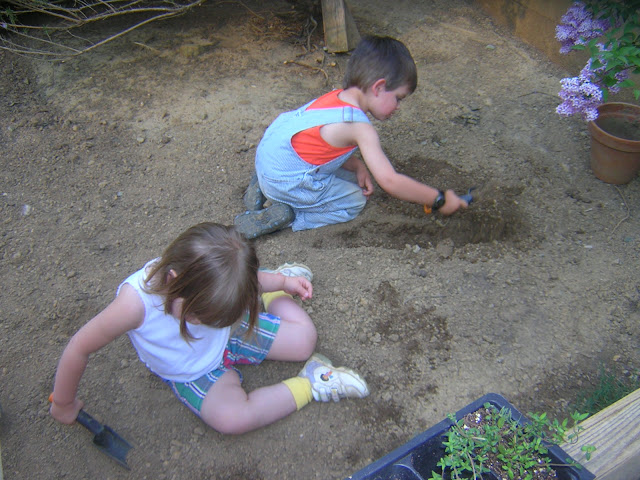
- Join a Local CSA farm and feed your family a variety of fresh, local, organic fruits and vegetables, serve uncooked foods when you can and visit the CSA farm so your kids can play in their dirt, too. (The photo above is of two very happy kids in the dirt at Killen Farms in Pittsboro, NC - courtesy of Jennifer and Jason Killen.) Take your children to the Farmer’s Market and let them try free samples whenever you can. Look on www.LocalHarvest.org for resources nearby.
- Don’t use pesticides around children! No matter what you think about the hygiene hypothesis, know that the same argument does NOT apply to pesticides and other toxic chemicals. Children are more sensitive to health damage from pesticides and many other pollutants than adults are, so it’s extra important to keep their environments toxic-free. Try natural methods instead - you can get some ideas for least-toxic pest control methods from Toxic Free NC’s website.
Tuesday, February 23, 2010
America's Most Wanted Toxic Chemicals
by Andy Igriegas
Campaign Director, Safer Chemicals, Healthy Families
Reposted with permission
One way we'll know that Congress is serious about reforming the nation's chemical laws is by how they address a group of extremely dangerous chemicals that are the equivalent of the FBI's "Most Wanted" list: Persistent, Bioaccumulative Toxins or PBTs.
Some of the most notorious chemicals ever studied are PBTs - lead, PCBs, DDT, dioxin mercury, and cadmium. Many PBTs, including flame retardants and the stain-resistant perfluorinated chemicals (like PFOA used to make Teflon), are still found in products we use every day in our homes and places of work.
Persistent, toxic chemicals build up in our bodies and are passed on to the next generation. This is especially troubling to parents like Molly Gray, who want their children to have safe, happy and healthy lives that are free of toxic chemicals that may harm their health.
Molly's concern for this issue is deeply personal. Molly was part of a study that tested pregnant women for toxic chemicals; their developing babies were exposed to these chemicals during pregnancy.
Molly thought she'd test chemical-free because in the five years before becoming pregnant, Molly had done everything she could to reduce her exposure to toxic chemicals, including eating organic food, choosing low-mercury fish and avoiding personal care products with phthalates and fragrances.
Instead, despite taking precautions leading up to her pregnancy, Molly learned she had the highest levels of mercury – a PBT – of all the women tested in the study. And she tested above the national average for other chemicals tested, including phthalates, BPA, flame retardants, and "Teflon" chemicals.
We helped get Molly and her seven-month-old son Paxton to Washington, DC so she could tell Congress that what we don't know about toxic chemicals is harming real people, right now.
Senator Frank Lautenberg, who will soon introduce legislation to update the nation's chemical safety law, expressed concern, saying, " … in essence, the American public has become a living, breathing repository for chemical substances. And when the chemicals…show up on our children's bodies, we have a potentially dangerous situation."
The Safer Chemicals, Healthy Families coalition agrees with Senator Lautenberg. We believe it should be a no-brainer for Congress to put PBTs on a pathway to phase-out when it reforms
the Toxic Substances Control Act (TSCA).
Unfortunately, even no-brainer ideas have run into trouble recently, thanks to the lobbying efforts of the chemical industry. The chemical industry is trying to avoid action by convincing Congress that the right thing to do is to spend more years "studying" chemicals; chemicals that scientists have already shown to be notorious and dangerous.
Please write to your member of Congress to tell them that real TSCA reform will include taking immediate action to phase PBT chemicals out of commerce.
Monday, February 15, 2010
An awful tragedy (and what we can do about it)
Last week began with the terrible news that a 4 year-old girl in Layton, Utah was killed after gas from a powerful rat poison seeped into her home. Two days later, the girl's 15 month-old sister also died in the hospital. Both girls were buried by their family yesterday, on Valentine's Day.
The Friday before the girls became sick, an exterminator spread several times the recommended amount of Fumitoxin, a phosphine-producing rat poison for which there is no known antidote, in the yard around the girls' home to take care of a vole problem. The contractor failed to follow the label for the poison, which listed specific instructions for quantity and appropriate distance from buildings.
As heartbreaking as this story is, it's made even more so by virtue of the fact that it was completely, 100% preventable. Had the contractor chosen one of the many least-toxic alternatives, or even just followed the label instructions, we probably never would have even heard of the Toone family.
The bottom line, though, is that a product this dangerous shouldn't be available for casual use. Given the plethora of safer alternatives that exist, maybe we don't need Fumitoxin at all--many pest control companies have already stopped using it because it is so risky. Unfortunately the current process for restricting or banning a pesticide (or any chemical, for that matter) is convoluted and strongly favors the manufacturer.
Until now, that is. We are on the brink of big changes in our nation's approach to chemical regulation. There is a large movement building across the country to reform the Toxic Substances Control Act (TSCA)--a 30 year-old regulatory device that has never properly worked. While TSCA wouldn't directly change the laws which apply to pesticides (i.e. FIFRA), it will almost certainly lead to the reform of those laws.
Check out this beautiful video highlighting the need to improve the way we regulate ALL chemicals for the health of our children, ourselves and the planet. From there you can sign a petition, tell a friend, write a letter to your congressperson--whatever you want to do to show support for this long overdue reform.
Our hearts go out to the family of those two little girls, even as we continue working for a safer and healthier future.
Monday, June 1, 2009
Why do so many doctors oppose the Titan cement plant?
The medical community is coming out in force against the proposal to build a massive cement plant in New Hanover county.
In his article (pdf, 144 KB) for Wilmington Parent magazine, pediatrician Dr. David Hill discusses how mercury in the environment affects children's brain growth and development, and the damage to growing lungs caused by particulate pollution in the air - both of which the Titan plant will bring in spades. Dr. Fred Opper, Clinical Assistant Professor of Medicine at the UNC School of Medicine, reminds us in his statement (pdf, 44 KB) that no level of mercury exposure is safe for children, and that more than 8,000 children live or attend school within 5 miles of the proposed Titan site.
Titan officials love to argue that the toxic pollution that will be emitted by the plant will be completely legal - all within federal and state limits. Small comfort when there are already more than 30 species of fish so polluted with mercury that the state of North Carolina recommends children and women of child-bearing age avoid eating them altogether. Mercury isn't just a passing cloud - once it's in the environment, in our food and water and bodies, it's there for life. Adding another significant mercury source to our state's already-full lineup is just a bad idea, and physicians get that better than anyone. You know what they say about an ounce of prevention.
Want to know more? Check out StopTitan.org.

Tuesday, April 28, 2009
Pesticides in child care - not a pretty picture

A new report out this week from Toxic Free North Carolina, Avoiding Big Risks for Small Kids, takes a look at how child care centers are managing pests in our state – and reveals a less-than-heartening picture. Compared with public schools, who are rapidly adopting IPM in North Carolina, child care centers are lagging way behind.
_ Most of the child care centers we surveyed use old-fashioned, higher-risk practices like broadcast pesticide spraying inside the facilities. Even when the center contracted with professionals, the survey found both widespread overuse of pesticides, and a troubling lack of safety precautions like warning signs or safety information provided about the chemicals being used.
_ The survey also found very limited adoption of safer practices, such as IPM. The US EPA recommends IPM for schools, child care centers and other sensitive areas because it focuses on preventing pest problems and minimizing pesticide spraying. In contrast with NC public schools, child care centers have hardly begun to adopt this common-sense practice. Fewer than 24% of child care providers reported using practices that qualify as IPM – but those who did also reported fewer serious pest problems.
So what can parents & child care providers do about this? Check out the list of five questions that parents should ask their child care providers to find out what they’re doing. There's also a resource for child care providers on how to contract for safer pest management in their facilities.
We know well that kids and pesticides don't mix, but this report makes clear that North Carolina child care providers still need to hear that message. So let's get it out there!
Download the report, get the fact sheets and learn more at Toxic Free NC's website.
Wednesday, January 14, 2009
Environmental Causes of Autism
Rates of autism nationwide have skyrocketed over the past 15 years. Scientific American reported this week on new research coming out of CA finding that chemicals in our environment may be responsible for most of the rise. Which common but easy-to-avoid chemicals are high on those scientists’ list of suspected culprits? Some are things you might guess, and others maybe not.
From the Scientific American article:
"Dozens of chemicals in the environment are neurodevelopmental toxins, which means they alter how the brain grows. Mercury, polychlorinated biphenyls, lead, brominated flame retardants and pesticides are examples.
While exposure to some--such as PCBs--has declined in recent decades, others--including flame retardants used in furniture and electronics, and pyrethroid insecticides--have increased.
Mothers of autistic children were twice as likely to use pet flea shampoos, which contain organophosphates or pyrethroids, according to one study that has not yet been published. Another new study has found a link between autism and phthalates, which are compounds used in vinyl and cosmetics. Other household products such as antibacterial soaps also could have ingredients that harm the brain by changing immune systems, Hertz-Picciotto [the lead researcher in the study] said."
 Yikes! Maybe you're a parent or want to be one, or maybe you aren't - either way take heed that these chemicals are at the top of a list of things that are bad for babies' brains, and it stands to reason that they're not great for your brain either. Many of the same chemicals listed here are also linked with increasingly common health problems in adults, like cancer and Parkinson's disease.
So here's your list of stuff to avoid based on this article, and some tips for avoiding them:
* Flame retardants found in furniture or electronics. Tips from Environmental Working Group on avoiding them.
* Pesticides in general, with special caution about pet shampoos and other products that contain organophosphates and pyrethroids. There are lots of ways to avoid these, but I'll share a couple of the most relevant highlights: 1) Eat organic. (It's a perfect time of year to join a CSA - more on that in an upcoming tip!) 2) Use non-toxic methods to get rid of home and garden pests - check out ToxicFreeNC.org for more info, and also my past NewRaleigh posts. And, 3) if you have pets, use least-toxic alternatives to flea shampoo.
* Phthalates, found in vinyl, some cosmetics, and some plastics. Also associated with reproductive system disorders in male children. Augh. Tips for avoiding phthalates from the Pollution in People project.
* Antibacterial soaps, which commonly contain triclosan - actually a pesticide. Did you know that studies have found that regular soap gets just as much bacteria off your hands as antibacterial soap does? Tips for avoiding triclosan in soaps and other antibacterial products.
I'm planning to address each of these chemicals in more depth as part of my "Toxic Free NC Tips of the Week" series for NewRaleigh.com. If there's any in particular that you're keen to learn more about ASAP, please drop me a line.
Tuesday, March 18, 2008
Preventing poisonings
It's National Poison Prevention Week, and the US EPA is touting its big message to prevent childhood pesticide poisonings: lock up your pesticides. That's the word from Assistant Administrator Jim Gulliford in a podcast out this week from EPA. Poison Control Centers report that more than 50 percent of over two million exposure incidents each year involve children under six years of age, so to combat the danger, EPA wants us to put locks on the cabinets where we keep the poisons.
What a radical message. Every week EPA reviews new studies about how low-level pesticide exposure can increase children's risks for cancer, harm neurological development, increase the risk and severity of asthma, and on and on. Amendments to the Federal Pesticide Law in 1996, in response to the groundbreaking National Research Council report "Pesticides in the Diets of Infants and Children," recognized that children are exposed to many pesticides at once through their diets, water and surroundings -- at potentially hazardous levels -- and required new restrictions on agricultural pesticide use to reduce those aggregated exposures. EPA funds dozens of programs around the US to reduce children's pesticide exposure in schools, public housing and child-care centers through Integrated Pest Management.
So when it comes down to the public message, why is EPA telling people that the way to protect kids is to keep on using pesticides -- just lock them up when you're done? How about this for a protective message: hey, you've got kids in the house, and you really ought to quit spraying pesticides altogether. No exposure, no storage problems... no risk of accidental poisoning. That's a simple, straightforward message that will actually protect children.
For every category of potential household poison that Gulliford enumerated in the podcast, there is a simple non-toxic replacement. That's what the IPM programs that EPA supports are all about -- eliminate the risk by eliminating the poison in the first place. Is there a safer way to control pests? You betcha. It's also the safer way to prevent childhood poisonings.
Thursday, January 31, 2008
Feeding our kids, without contamination
Did you need another reason to buy organic food for your kids? If so, yesterday's news from Emory University ought to do it.
Yet another study shows that kids who eat "conventional" diets -- that is, food grown in the standard way with chemical fertilizers and pesticides -- have significant levels of neurotoxic pesticides in their bodies. And when those same kids switch to an organic diet -- that is, no chemical fertilizers or pesticides -- the pollution disappears from their bodies. When they go back to "conventional" foods, the pesticide residues come right back again.
Researchers at Emory University followed a cohort of 21 elementary school-aged children and measured the pesticide metabolites for two common insecticides -- chlorpyrifos and malathion -- in their urine and saliva. These two pesticides belong to a larger family called "organophosphates," which target the nervous system. There is a wealth of evidence that exposure to organophosphates harms children, particularly their developing brains.
This study is important, not just because it's another sign that organically-grown foods really are different from conventional (and therefore worth the extra investment), but because it shows that federal laws designed to keep pesticides out of our kids' diets aren't working.
If you're one of those families who's looking for strategies to buy organic foods without breaking the bank, check out our article Organic on a Budget. But safe food shouldn't just be for families who have an organic grocer nearby and can afford to shop in it -- all our kids should be able to eat plenty of fresh fruits and vegetables without contamination by neurotoxins. You can help make that happen, too:
- Introduce some families you know to the local farmer's market.
- Organize with your PTA to get your school's cafeteria buying local, organic produce. Check out farmtoschool.org for some neat resources.
- Let your elected officials know that pesticides don't belong in our kids' bodies. Not only should we be lowering the "tolerated" levels of pesticide residues on our foods, but we should be promoting sustainable agriculture that reduces dependence on toxic chemicals for all growers.
Friday, November 30, 2007
Premature puberty, pesticides, and breast cancer
 A special report by PESTed hero Sandra Steingraber was released by The Breast Cancer Fund a few weeks ago, called The Falling Age of Puberty in U.S. Girls. Early onset of puberty in girls is a major risk factor for breast cancer, as well as for a host of other emotional and physical health issues related to body image and self-esteem, drug abuse, early sexual activity, and even likelihood of physical abuse. The report is a comprehensive review of the literature on premature puberty with analysis and recommendations that point to some really important themes -
* This is not a normal or natural trend. Average age at puberty for girls fell from the late teens to the early teens over 19th and 20th centuries, mostly due to improvements in nutrition and health care. However, current trends do not follow with the historical trend - average age of onset of menstruation has fallen only by a few months over the past 40 years, while average age of first breast development has fallen by 1 - 2 years. And, both numbers have fallen farther and faster for African American and Hispanic girls than for Caucasian girls.Taking this report together with evidence that boys are also being negatively affected by endocrine-disrupting chemicals in the environment, I feel all the more concerned, and strengthened in my resolve to work to reduce children's pesticide exposures in my community and my state. Looking at information like this should remind us that environmental responsibility isn't just about the environment - it's about social justice and fighting back against the very real health effects of racism and poverty, and it's about feminism and fighting for the sexual and reproductive health of girls and boys.
* This is a racial and socioeconomic issue as much as it is a women's issue. Early-onset puberty is connected to a complicated matrix of other health issues that affect our hormones, including obesity, stress, pre-term birth and birth weight, level of physical activity, and exposure to chemical pollution in the environment. The result is that early-onset puberty and the health and emotional risks it brings are more common for people of color and low-income communities, who suffer disproportionately from all those other health risks.
* A precautionary approach to endocrine-disrupting chemicals - including pesticides - is needed! Compared with girls 40 years ago, girls today are exposed to a host of chemicals in their environment that may affect the functioning of their hormones in childhood and puberty, and that they may pass on to their own children during pregnancy and breastfeeding. Not least among these are pesticides, which contaminate our drinking water and food, and may also contaminate our homes, schools, childcare centers, and workplaces. We simply cannot afford to wait around to find out exactly how and why these chemicals could be hurting us before we take action to reduce or eliminate them from our environment. To do so would not only be imprudent, but unfair to our children, and to the socioeconomic groups that are most heavily affected.
Please join me in making more responsible decisions about what you buy for your holiday celebrations, and all year round. For those of you here in North Carolina, here are some important ways to take action to reduce pesticide use at your child's school or childcare center, and to speak out for just and sustainable local agriculture. Also, check out The Breast Cancer Fund's ideas for "What You Can Do Personally and Politically."
Friday, August 10, 2007
Pesticide Free Kids Days - Wrap up
This entry is written by Anna Jensen, who worked in PESTed's office this summer through the Into the Fields Internship program at Student Action with Farmworkers.
“Do it!” the other kids urged, and she pantomimed stepping on me. Like any good cockroach would do, I curled up and died. Our audience of parents laughed and applauded.
The occasion for my transformation into a cockroach was Pesticide-Free Kids Day, an event that I organized in two different small towns in North Carolina this summer. Families in Prospect Hill (near Hillsborough) and Bailey (near Wilson) gathered to talk about pesticide use in their communities and how to protect their children from exposure. PESTed worked with health clinics and Migrant Head Start centers in these areas to organize an afternoon of food, children’s games, and discussion about the risks of pesticides and safe alternatives. During the parents’ discussion, the children created a play about the dangers of pesticides, and other ways to kill or prevent bugs in the house, which was how I ended up crawling around on the floor pretending to have antennae.
Both events aimed to teach safe pest control to parents, with an emphasis on safety for farmworker families who face additional work-related exposure besides the everyday dangers of pesticide drift, household pesticides, and food contamination. Parents had an opportunity for hands-on learning with a “make-your-own nontoxic cleaner” station, and kids learned about safe pest control as well by doing activity booklets, playing the quiz wheel, and creating their own play about safe alternatives to pesticides. Kids and adults alike enjoyed meals made from fresh local food donated by area farmers and stores. We finished off the events with raffle drawings for prizes like phone cards, gift cards, and movie tickets, also donations from concerned community businesses.
Perhaps most importantly, PESTed also had a chance to learn what families’ primary concerns were; whether parents were worried about safe home pest control, pesticide drift, or the pest control plans of their health clinics or daycares. PESTed staff gave the families information about alternatives, and the parents discussed among themselves and with the community partners present what their priorities were in reducing pesticide use in the area. PESTed made connections with parents, health clinics, and daycares who are interested in continuing to work together to ensure “Pesticide-Free Kids” in their communities!
See photos from Pesticide Free Kids Day - Prospect Hill and Pesticide Free Kids Day - Bailey.
Wednesday, July 18, 2007
Mosquito misters: solace or toxic rip-off?
At Toxic Free NC we get a lot of questions about how to handle pest problems without resorting to poisons. One of the products that seems to generate the most calls and emails lately is the backyard mosquito misting system, marketed under various trade names such as MosquitoNix, Mister Mosquito and others.
With a price tag in the thousands and soothing advertisements that offer freedom from mosquitoes using "natural botanicals," the mosquito mister is quickly becoming this season's Gucci handbag for homeowners. The question we keep getting is:
- Do they work?
...and a close second, from some of our long-time supporters:
- How do I convince my neighbors not to buy this poison-mister?
Both good questions. Let's start with the 'do they work' question. A recent bulletin from NCSU entomologists Charles Apperson and Mike Waldvogel states: "We have not seen any scientific studies regarding the true efficacy of these systems in controlling mosquitoes." Here are a few reasons why the misters won't work well in North Carolina:
- The systems don't prevent mosquitoes. They could kill mosquitoes who happen to be flying by when the mist is released. However, once the mist disperses, mosquitoes can fly back into the area safely.
- Actively killing adult mosquitoes is most conducive to human comfort during the time and in the area where humans are present. Clearly, "when humans are present" is not the appropriate time and place to be applying a fine insecticide mist.
- The system is timed to release a cloud of insecticide in the morning and again in the evening. Our most active mosquito species, the Asian Tiger mosquito, is active all day long, so the system would miss the vast majority of our nastiest mosquito pest's activity.
- Futhermore, spraying the same insecticide over and over, day-in and day-out, is a good way to experiment with inducing insecticide resistance in your local mosquito population. A system that might have provided temporary relief in the beginning would lose effectiveness over time.
Now, on to the implied "are they safe?" part of question #2. The "natural botanical" you keep hearing about in the MosquitoNix commerical is pyrethrin. While pyrethrin is derived from chrysanthemums, that doesn't make it benign. Pyrethrin is also just one of the ingredients in the insecticide formulation, which also includes chemical synergists, propellants, and other "inert" ingredients. Pyrethrin is a broad-spectrum insecticide that will also kill any other flying insects that happen to be in the path of the mosquito mist -- including butterflies, bees, dragonflies... get the idea? It's not a mosquito seek-and-destroy weapon.
A few weeks ago at a backyard cookout, I witnessed an asthmatic child have a frightening wheezing episode after he inhaled the mosquito repellent mist that an adult was applying to herself nearby. Inhaling a fine mist - even one that contains "natural botanicals" - can be dangerous, especially for children.
If you ask an entomologist how to prevent mosquitoes in your backyard, they will undoubtedly give you the tried-and-true methods: remove standing water, wear long pants and sleeves when you can, choose a safe insect repellent if you're outdoors when mosquitoes are active, and for areas with standing water that can't be drained, use mosquito dunks made from Bt (Bacillus thuringiensis israelensis) to prevent larvae from becoming adults. More on mosquito prevention.
In summary: mosquito misters seem to be a really expensive way to kill a handful of random flying insects twice a day. If you want to avoid mosquito bites, you don't have to spend a lot of money or use a lot of chemicals - just some common sense.
Monday, July 9, 2007
Children of Men
Happy (ahem, very belated) Father's Day to all out there!

Add to this the declining male to female birth ratio in many industrialized nations, and you paint a very striking picture - not only are childhood environmental health problems on the rise overall, but they've risen more for boys than for girls! What is going on here?
The report shares some theories that are out there about why boys may be at greater risk for environmental health damage than girls. For one thing, many common chemical pollutants are "endocrine disruptors," meaning that they mess with normal hormone functions in living things. Many of this class of pollutants are particularly damaging to the pathway for testosterone production in mammals (including humans!), thereby putting males at increased risk for related problems.
For another, the development of the male reproductive system in utero is a more complicated process than the development of the female reproductive system. With more developmental steps, there are more opportunities for chemical exposure to interfere and cause something to go wrong.
Another difference that may make boys more prone to asthma is that they tend to have smaller airways relative to their lung size than girls do, and they tend to have higher rates of allergies.
So, what can we do to protect our boys? The Father's Day Report provides an excellent list of tips for reducing children's exposure to chemicals in the environment, especially geared for Dads. Fathers' exposure to toxic chemicals has been connected to environmental health problems for their children, and the report provides an excellent analysis of the different types of exposure risks. Many of the report's tips for Dads revolve around protecting themselves from exposure to chemicals at work, and taking precautions to keep work- and hobby-related chemical residues out of the family environment. Simple things, like handwashing, showering after work, good ventilation, and washing work clothes separately from family clothes. The report also recommends that Dads take responsibility for ensuring that their home and their child's school or childcare center are using safer alternatives to pesticides and other toxics whenever possible. PESTed recommends Integrated Pest Management, or IPM, as a kid-safe approach to pests for schools, childcare, and home, too. Find out more about IPM for schools and childcare centers.
I think this report is a really important wake-up call for families, and especially for Dads, to be extra careful to protect themselves and their children from exposure to chemical pollutants. Remember, it's not just our own health at risk when we breathe in chemical fumes or work with pesticides, solvents, and other hazardous chemicals. When those chemicals get into our bodies or onto our clothes and skin, our families can get second hand exposures that pose very serious health risks, especially for children, and it seems more and more, especially for our boys. So, please be careful, Dads and everyone!
Tuesday, April 3, 2007
PESTed in Greenville, NC

At left, you see several young children pounding colorful bits of vegetables to transfer their pigments onto squares of muslin fabric in an activity we call "Veggie Painting." Kids work out some energy with all that pounding! They also learn about some new vegetables they might not have tried before, and about the high vitamin content of fresh fruits and vegetables....and when they're finished, they have a beautiful piece of abstract veggie art to take home!

We're planning to bring the PESTed info & activity booth to several more festivals in different parts of North Carolina this month - check out our calendar for the schedule. Would you be interested in coming to help out at one of these events as a volunteer? Or, would you like to see the PESTed booth come to your town this year? Let us know!
Saturday, March 17, 2007
Preventing child poisonings
In recognition of National Poison Prevention Week (March 18-24), the US EPA has issued recommendations regarding the tens of thousands of children who are sickened by rodenticides - rat poison - every year in the United States. Rat poison is extremely dangerous to children because of its high toxicity - rats have strong constitutions - and because the little pellets can look just like candy to a small child. Low-income and minority children have been most heavily affected - EPA's recommendations note for example that the vast majority of children hospitalized in New York state for rodenticide poisoning are black and Latino.
EPA is now soliciting public comment on a new decision that will end the sale of the pellets, and require that all rat poison sold in the United States be sold as blocks within tamper-resistant bait stations. EPA has finally come up with the right decision, but much too late.
For many years EPA bowed to pressure from pesticide manufacturers who protested against changing their rat poison formulations, despite a 1998 scientific review that would have required them to add bittering agents and indicator dyes to the pellets to protect children. This position was reversed in 2001, when EPA decided the protective measures would make the poisons "less attractive to rats."
A 2005 court ruling in a lawsuit from West Harlem Environmental Action and the Natural Resources Defense Council ordered EPA to undo its 2001 mistake and enact the children's protections. A full two years later (and nine years after the scientific review that recommended it in the first place), EPA is finally issuing the rules that will pull dangerous pellets off the shelves and prevent many thousands of unnecessary childhood poisonings every year.
If I were writing my comments to EPA on this proposed decision, I think the only thing I could say is "what took you so long?".
