Tuesday, September 27, 2011
Posted by
Anonymous
at
2:07 PM
0
comments
Labels: children's health, farms, farmworkers, food, take action, take note
Wednesday, June 9, 2010
Goodbye, Endosulfan!
One year ago this week, Toxic Free NC joined farmworker, health and environmental advocates around the nation calling on the US EPA to take the notoriously dangerous pesticide, endosulfan, off the market in the US. Read our blog post from June 8, 2009.
Today the EPA announced that it would do just that, to protect the health of farmworkers and wildlife.
Many thanks to all of you who joined the petitions to reconsider the scientific evidence, and cheers to EPA for getting rid of this persistent pollutant!
Friday, March 12, 2010
Ambassadors Workshops & Friday News Roundup for 3/12/10
Toxic Free NC's staff is giving three upcoming workshops on Ambassadors for Just & Sustainable Agriculture. More about that program here.
- Black Mountain this Sunday, 3/14 at 3:30 (don't forget about daylight savings), Lakeview Community Center, 401 Laurel Circle Drive, Black Mountain, NC. Questions or RSVP: ana@toxicfreenc.org.
- Greensboro next Thursday, 3/18, 6 pm on the campus of Bennett College. Full details on Facebook and Google Calendar. Contact Billie with questions or to RSVP: billie@toxicfreenc.org.
- Pittsboro on Tuesday, 3/23 on the campus of Central Carolina Community College. Full details TBD - contact Billie to RSVP and get the full details as they become available: billie@toxicfreenc.org.
In other good foodie news:
5% Day for Toxic Free NC at Whole Foods in Cary set for 4/6/10
The next meeting of the NC Sustainable Local Food Advisory Council has been set for April 22nd - Earth Day! - in Raleigh. More about their first meeting in Feb. Full details on the April meeting TBA - keep an eye on this website for updates.
Rush Holt (D-NJ) introduces Farm to School legislation in Congress. Here's a video of Holt speaking about this bill in a House committee - nice!!
Posted by
Billie
at
5:00 PM
1 comments
Labels: farms, farmworkers, food, in the news, take action
Tuesday, February 23, 2010
America's Most Wanted Toxic Chemicals
by Andy Igriegas
Campaign Director, Safer Chemicals, Healthy Families
Reposted with permission
One way we'll know that Congress is serious about reforming the nation's chemical laws is by how they address a group of extremely dangerous chemicals that are the equivalent of the FBI's "Most Wanted" list: Persistent, Bioaccumulative Toxins or PBTs.
Some of the most notorious chemicals ever studied are PBTs - lead, PCBs, DDT, dioxin mercury, and cadmium. Many PBTs, including flame retardants and the stain-resistant perfluorinated chemicals (like PFOA used to make Teflon), are still found in products we use every day in our homes and places of work.
Persistent, toxic chemicals build up in our bodies and are passed on to the next generation. This is especially troubling to parents like Molly Gray, who want their children to have safe, happy and healthy lives that are free of toxic chemicals that may harm their health.
Molly's concern for this issue is deeply personal. Molly was part of a study that tested pregnant women for toxic chemicals; their developing babies were exposed to these chemicals during pregnancy.
Molly thought she'd test chemical-free because in the five years before becoming pregnant, Molly had done everything she could to reduce her exposure to toxic chemicals, including eating organic food, choosing low-mercury fish and avoiding personal care products with phthalates and fragrances.
Instead, despite taking precautions leading up to her pregnancy, Molly learned she had the highest levels of mercury – a PBT – of all the women tested in the study. And she tested above the national average for other chemicals tested, including phthalates, BPA, flame retardants, and "Teflon" chemicals.
We helped get Molly and her seven-month-old son Paxton to Washington, DC so she could tell Congress that what we don't know about toxic chemicals is harming real people, right now.
Senator Frank Lautenberg, who will soon introduce legislation to update the nation's chemical safety law, expressed concern, saying, " … in essence, the American public has become a living, breathing repository for chemical substances. And when the chemicals…show up on our children's bodies, we have a potentially dangerous situation."
The Safer Chemicals, Healthy Families coalition agrees with Senator Lautenberg. We believe it should be a no-brainer for Congress to put PBTs on a pathway to phase-out when it reforms
the Toxic Substances Control Act (TSCA).
Unfortunately, even no-brainer ideas have run into trouble recently, thanks to the lobbying efforts of the chemical industry. The chemical industry is trying to avoid action by convincing Congress that the right thing to do is to spend more years "studying" chemicals; chemicals that scientists have already shown to be notorious and dangerous.
Please write to your member of Congress to tell them that real TSCA reform will include taking immediate action to phase PBT chemicals out of commerce.
Posted by
Ana
at
4:10 PM
0
comments
Labels: children's health, consumer protection, guest blogger, take action
Monday, February 15, 2010
An awful tragedy (and what we can do about it)
Last week began with the terrible news that a 4 year-old girl in Layton, Utah was killed after gas from a powerful rat poison seeped into her home. Two days later, the girl's 15 month-old sister also died in the hospital. Both girls were buried by their family yesterday, on Valentine's Day.
The Friday before the girls became sick, an exterminator spread several times the recommended amount of Fumitoxin, a phosphine-producing rat poison for which there is no known antidote, in the yard around the girls' home to take care of a vole problem. The contractor failed to follow the label for the poison, which listed specific instructions for quantity and appropriate distance from buildings.
As heartbreaking as this story is, it's made even more so by virtue of the fact that it was completely, 100% preventable. Had the contractor chosen one of the many least-toxic alternatives, or even just followed the label instructions, we probably never would have even heard of the Toone family.
The bottom line, though, is that a product this dangerous shouldn't be available for casual use. Given the plethora of safer alternatives that exist, maybe we don't need Fumitoxin at all--many pest control companies have already stopped using it because it is so risky. Unfortunately the current process for restricting or banning a pesticide (or any chemical, for that matter) is convoluted and strongly favors the manufacturer.
Until now, that is. We are on the brink of big changes in our nation's approach to chemical regulation. There is a large movement building across the country to reform the Toxic Substances Control Act (TSCA)--a 30 year-old regulatory device that has never properly worked. While TSCA wouldn't directly change the laws which apply to pesticides (i.e. FIFRA), it will almost certainly lead to the reform of those laws.
Check out this beautiful video highlighting the need to improve the way we regulate ALL chemicals for the health of our children, ourselves and the planet. From there you can sign a petition, tell a friend, write a letter to your congressperson--whatever you want to do to show support for this long overdue reform.
Our hearts go out to the family of those two little girls, even as we continue working for a safer and healthier future.
Posted by
Ana
at
9:29 AM
0
comments
Labels: children's health, consumer protection, in the news, take action
Thursday, December 3, 2009
December 3, 1984
By guest blogger Allen Spalt
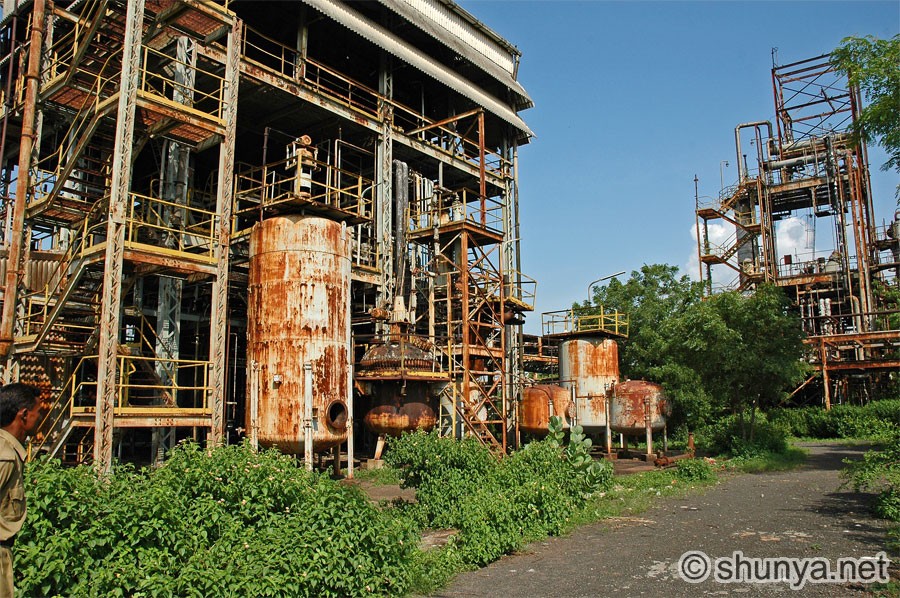
Today is the 25th anniversary of the disaster at Bhopal, India.
When the badly designed and improperly maintained chemical tank failed at the Union Carbide pesticide plant in Bhopal and sent a cloud of deadly methyl isocyanate (MIC) gas over the city killing thousands in the middle of the night, it was the world's works industrial "accident." It also poisoned thousands of others with health effects that linger today (for those who have survived that long).
For me, it is a strong reminder and impetus for our work. It was also totally unnecessary in at least two ways.
First, the pesticides being manufactured there, carbaryl (Sevin) and Aldicarb, can be made with a 'flow through' process that does not require the use of intermediate holding tanks for the MIC which is used in the manufacture of the final products. In fact, at the time, Bhopal's sister plant in Institute, West Virginia, did not contain such tanks. Better oversight and maintenance might have prevented the leaks, of course, but in fact the tanks were not even necessary. Just cheaper. So to save a few bucks on the process and on maintenance, Union Carbide risked the lives of tens of thousands.
Second, we work to promote alternatives which would make the manufacture of such deadly pesticides unnecessary. You don't need Sevin or Aldicarb or other similar deadly poisons in sustainable or organic agriculture. Every acre that is converted means fewer pounds of poison manufactured, sold, used, or disposed of. Fewer people at risk. Less residues in the water, soil, and food. Safer environments for our children and wildlife.
Someday it will be recognized that what has been called "conventional agriculture" for the last few decades was anything but. It is horribly out of sync with the tradition of agriculture over the centuries. With chemical intensive monocultures, it is depleting the soil and poisoning the water. It is not sustainable. The latest gasp of bioengineered crops, which promised more productivity and fewer chemicals, are proving to provide neither. They are less productive and require more herbicides and other pesticides. You know, if there is one thing the geniuses from Monsanto could select for besides Roundup-resistance, it would be greater productivity. But they haven't found it in any genetically engineered crop. More than a few critics from our side of the barn predicted this.
It is not a question of whether will we replace "conventional" agriculture with sustainable production, it is when. Otherwise we will not be sustained as a civilization.
Most indicators, fortunately, are not as dramatic as Bhopal, but they are pointing in our direction. I am proud to work with all of you on this important work to promote health and safety and to point the way to a sustainable future. Getting rid of pesticides is one important part of the struggle.
Union Carbide did not survive the aftermath of the incident, though it never paid fully for its responsibility. Its assets were sold. Work continues under other owners in RTP. The Bhopal plant was bought by Dow, which contends it has no responsibility to the victims.
On the tenth anniversary I was giving a workshop at a meeting in Atlanta and asked for a moment of silence for Bhopal. I was moved when one participant introduced himself as having grown up in Bhopal. He is one of three or four people I've met from there, the others are survivors of the disaster. Today I will take time out to remember them and others and rededicate to the task.
Join us in commemorating the Bhopal anniversary by taking action for justice in Bhopal.
Monday, June 8, 2009
Time to end Endosulfan
There aren't many pesticides as nasty as endosulfan still on the market. Endosulfan is a highly-toxic insecticide from a family of chemicals called organochlorines. If that term sounds familiar, you might recognize some of the other now-banned cousins from this group of highly-persistent pesticides: DDT, chlordane, aldrin and heptachlor.
Endosulfan has been blamed for severe poisonings and even deaths among farmers and farm workers, not to mention reproductive damage and birth defects. So why are we still using this stuff?
EPA is re-thinking its continued registration of endosulfan, and has recently re-opened a 60-day public comment period on the antiquated chemical. Take a minute to sign the United Farm Workers' petition to EPA administrator Lisa Jackson asking her to ensure that this dangerous pesticide is finally removed from the US market.
In North Carolina, endosulfan is still used on some vegetable crops, though there are myriad alternatives available. The National Agricultural Statistics Service reported that in 2007 endosulfan was applied to about 22% of tomato fields in our state - putting both farm workers and consumers at unacceptable risk of exposure. Because endosulfan is so persistent in the environment, traveling long distances and bioaccumulating in the food chain, it has been banned in more than 60 countries.
It's long since time the U.S. joined their ranks. To sign the petition, click here.
Monday, November 10, 2008
We (still) need you.
Election season has had Raleigh buzzing these past few months. I have LOVED seeing people so interested in what's going on, passionate about the issues, and generous with their time and support. Knowing that the same thing was going on in communities all across the state and across the country has made me feel so proud of us all, and hopeful about our future.
Now that the results are in (for the most part!), the campaigns have packed up and left town, and everyone's had a few days to recover from election-night parties, I beg you, people of NC and beyond: Don't stop being interested, passionate and generous. No matter whether your candidates won or lost, no matter how much or how little time or money you have to give, let there be no doubt that we (still) need you.
Much like an election campaign, non-profit advocacy organizations like Toxic Free NC need the energy of volunteers and activists to create change. But, unlike election campaigns, non-profits like ours are working at it all year, every year, no matter who's in office. Toxic Free NC helps people make changes at the personal, institutional, and political levels that fight pesticide pollution and promote health and justice in our state.
So, I invite everyone out there who's recovering from election fever to check out Toxic Free NC's volunteer opportunities, consider making a donation, or work with us on one of several exciting campaigns for local and state-level change. Just a few of the things we're working on right now:
- Reducing pesticides at school
- Reducing pesticides in childcare centers
- Just & sustainable food for cafeterias
- Pesticide safety rules that protect farm workers
- Asking our representatives for proactive sustainable agriculture policies
Thursday, October 30, 2008
Get out there and vote!
Vote early by this Saturday or vote Tuesday November 4th
Get all your voting questions answered at: www.ncvoterinfo.com
With national and state candidates crisscrossing the state, it's clear that North Carolina is headed for a historic level of voter turnout this year. Don’t be left out! You have two options for voting in North Carolina:
1. Vote on Election Day next Tuesday, November 4th . The polls open at 6:30AM and close at 7:30 PM. Find your precinct at the State Board of Elections website.
2. Vote early through this Saturday November 1st. Early voting gives you added flexibility to vote when you have the time rather than trying to fit it in on Election Day. Find your early voting locations and times here. Remember that you can go to ANY of the locations listed in your county.
Early voting is also your last chance to register and vote in North Carolina for next Tuesday’s election. If you’ve moved since you last voted then you need to re-register through early voting. You can also check your current registration status, or contact your local board of elections for more information.
Make sure you know who you’re voting for: go to the State Board of Elecitons site and click on the link for “General Election Sample Ballots.” You can get additional voting questions answered and see bios of the candidates running for state office with this non-partisan voter guide (this is a pdf file download).
Here are some additional resources for other voting and election questions or problems:
- NC Voter Info.com
- Democracy NC's Election Connection
- Or call 1-888-OUR-VOTE
And make sure your friends and family have all the info they need to vote in North Carolina!
Friday, September 5, 2008
Community Organizing 101: Building community, strengthening democracy, and getting things done.
It's true, most people don't know what the heck I mean when I say that I'm a community organizer. But even though the term is unfamiliar, I think most people would readily recognize "organizers" in their own communities as leaders and connectors - the proverbial "movers & shakers." Anyone who's ever put together a community event like a fundraiser, service project, strike, boycott, or protest; started a new club, organization, union, or other group; asked people to sign a petition, contact their representatives, speak at a public meeting, or vote for a certain person or proposal was probably doing some community organizing.
Community organizing encompasses a really broad range of activities and issues, and many different kinds of people do it. Some are volunteers or concerned citizens, while others do it professionally; some do it as part of a congregation or organization, while others do it independently. But there are a few common threads that I think are the most important parts:
1. Making changes & getting things done. At the most fundamental level, community organizing is a process by which people get together - "organize" - to get something done. This could be changing a rule or policy, getting someone elected, starting a new group or program, stopping something hurtful to the community, or starting something needed and helpful. Whatever it is, people come together to make a plan and then do it together.
2. Community. Communities of people are built and strengthened by the process of community organizing. When a good organizer runs a campaign or project, the community is stronger when it's over, regardless of whether they actually won or accomplished the original goal. The people involved have built relationships, skills, knowledge, and confidence that make them more active and effective participants in their community, and make future community organizing projects easier and more successful.
3. Power, Equity and Democracy. In theory, a democratic process means that people who are affected by a particular decision get a equal say in how it's made, or at least an equal say in who gets to make it (i.e. through electing representatives). But in reality, that is often not the case. The dynamics of power, privilege, and profit in our society mean that the system isn't always fair, and some people can't get what they need through normal channels. Maybe they can't get pollution out of their air or water, can't get their child's public education improved, or can't get a fair living wage. Community organizing helps to correct injustices and fix an inequitable system by bringing people together to exercise their power as a voting block or a customer base, and demand the changes they need.
In our work at Toxic Free NC, this shows up as parents who want to get their schools or childcare centers to stop using pesticides, farmworkers or farm neighbors who don't want to be sprayed, consumers who want better access to food grown without pesticides, and lots of other things too. So, we work with these groups of people to help them get what they want, and in the process we build community and correct imbalances of power that create injustice and weaken our democracy. It's pretty heady stuff, and we're proud to be doing this important work in North Carolina.
Interested in getting organized in your community, and reducing pesticide pollution? We're here to help - please contact us!
Interested in becoming an organizer? It's a pretty great job, if I do say so myself. Here are a couple of my favorite resources:
Midwest Academy
The Community Toolbox
PS: I really like this quote I just found from Mike Miller of the Organize Training Center:
Organizing does two central things to seek to rectify the problem of power imbalance - it builds a permanent base of people power so that dominant financial and institutional power can be challenged and held accountable to values of greater social, environmental and economic justice; and, it transforms individuals and communities, making them mutually respectful co-creators of public life rather than passive objects of decisions made by others.
Thursday, August 28, 2008
Is EPA hiding information about honeybee disappearance?
We've been hearing about the mysterious illness affecting honeybees for some time now - colony collapse disorder, or CCD. It appears that this year has been even worse than last for beekeepers in the US. Pesticides are one of the leading suspects in this mystery, and attention has turned to a relatively new product called clothianidin, which is made by Bayer CropScience. In Bayer's home nation of Germany, clothianidin was recently banned for suspected effects on honeybees. Here in the US, the product is still very much in use, and the EPA has failed to respond to a Freedom of Information Act request from NRDC about the chemical's effects on honeybees. So, earlier this month, NRDC sued Bayer.
Get more on this development in the CCD story from NRDC, from Grist Magazine, and from the Raleigh News & Observer.
Want to do something more than fret? Please consider writing a letter to the editor of the Raleigh News & Observer - here are some tips for writing good letters to the editor from the NC Conservation Network, and instructions for submitting a letter to the News & Observer.
Monday, March 31, 2008
Farmworker Awareness Week
This is Farmworker Awareness Week, and a time to reflect, learn more, and support the millions of farmworkers whose labor puts food on every American table.
It's estimated that in North Carolina, about 100,000 - 150,000 farmworkers plant, tend and harvest our crops every year, particularly in labor-intensive crops like tomatoes, vegetables, Christmas trees and tobacco. The large majority of North Carolina's farmworkers are migrants who move from place to place following the harvest. The average annual income for a farmworker in the United States is about $11,000, or about $16,000 for farmworking family (though pay on the East Coast is lower than the national average). Farmworkers live in overcrowded housing, few receive health care or unemployment benefits, and about half of North Carolina's farmworkers cannot afford enough food for themselves and their families.
Farmworkers are also disproportionately exposed to hazardous pesticides on the job. A recent study in eastern North Carolina found multiple pesticide residues on the hands and in the urine of farmworker chidren. Many of you have followed the Ag-Mart case: last week the company settled for millions of dollars with the family of a boy, Carlitos Candelario, who was born with multiple severe birth defects, which his parents attribute to their hazardous working conditions at Ag-Mart.
This week you can attend events to learn about the rich history and culture of farmworkers in the United States, and you can take action to support better working conditions for the people who harvest our food. When you sit down to your next meal, please also take a moment to give thanks for the hardworking hands who brought it to you.
Thursday, February 14, 2008
Just Say No to Endosulfan
The EPA is taking public comment on its review of the acutely toxic pesticide endosulfan until next Tuesday, Feb. 19. The EPA considers endosulfan a potential human endocrine disruptor, and mounting evidence links endosulfan exposure with increased risk of autism and delayed puberty in boys. Endosulfan is already banned in Cambodia, the Philippines and most of Europe, but is still used in many other parts of the world including India and the U.S. In North Carolina, endosulfan is used on cotton, tomatoes, potatoes, apples and tobacco, with the highest concentrations of use in Eastern NC.
Our friends at the NC Conservation Network are conducting an online petition calling for a complete ban of endosulfan. Take a minute and let the EPA know where you stand!
It's worth noting that part of the reason these highly toxic chemicals are still around is that the people most affected by their continued use--farmworkers--are largely disenfranchised. Current laws not only fail to protect workers from the misuse of pesticides in the field, but they also fail to protect them from retaliation if they dare to file a complaint about it!
Picture a world in which farmworkers aren't hiding in the shadows, and you'll see a world in which toxic pesticides like endosulfan are a thing of the past.
Wednesday, January 23, 2008
Service
This week PESTed celebrated the life and work of Rev. Martin Luther King, Jr. by honoring our volunteers. At a volunteer appreciation party on Monday at DesignBox, we got a chance to say "thank you" to some of the wonderful people who give of themselves to make the movement for pesticide reform and a toxic-free North Carolina possible.
The King holiday was set aside by Congress as a national day of service in 1994, in order to encourage Americans to carry out one of Dr. King's great themes: that of service to others. We thank our volunteers in this same spirit, that of recognizing that greatness comes not from one's achievements and one's status in society, but from the greatness of our humility and our devotion to humankind. Dr. King gave his famous sermon on service, "The Drum Major Instinct," at Ebeneezer Baptist Church in Atlanta in 1968. Here is a portion of that sermon, which I know you will recognize:
And so Jesus gave us a new norm of greatness. If you want to be important — wonderful. If you want to be recognized — wonderful. If you want to be great — wonderful. But recognize that he who is greatest among you shall be your servant. (Amen) That's a new definition of greatness.And this morning, the thing that I like about it: by giving that definition of greatness, it means that everybody can be great, (Everybody) because everybody can serve. (Amen) You don't have to have a college degree to serve. (All right) You don't have to make your subject and your verb agree to serve. You don't have to know about Plato and Aristotle to serve. You don't have to know Einstein's theory of relativity to serve. You don't have to know the second theory of thermodynamics in physics to serve. (Amen) You only need a heart full of grace, (Yes, sir, Amen) a soul generated by love. (Yes) And you can be that servant.
Take a minute to read the whole sermon (and even listen to moving audio excerpts) at the website of the Stanford MLK Papers Project.
P.S. Thanks also to those who sponsored our volunteer appreciation party and helped us say "thank you" to some of those who serve: DesignBox, Neu Romance Entertainment, The Carolina Brewing Company, and Susan Barringer Wells. Here are some pictures from the party for your enjoyment!
![]() |
| MLK Day Volunteer Appreciati |
Posted by
Fawn
at
10:48 AM
1 comments
Labels: fun stuff, miscellany, take action, volunteers
Wednesday, January 9, 2008
Ag-Mart hearing at the Pesticide Board, 1/8/08
Yesterday, PESTed's staff attended a hearing in Raleigh on the infamous Ag-Mart case, in which the tomato grower has been investigated for hundreds of violations of NC pesticide law and federal Worker Protection Standards. The investigation started off back in 2005 after three of Ag-Mart's employees gave birth to children with severe birth defects, all within a few months of one another.
North Carolina's Pesticide Board, a citizen body that serves as the professional licensing board for pesticide applicators in the state, is charged with making the decision in the $185,000 case. At yesterday's hearing, the board heard hours of testimony from lawyers for both sides, and then asked their own legal counsel for other information before their next meeting on Feb 12th. So, no decisions until then, at least.
Three different news outlets have covered the hearing, so rather than giving you a blow by blow, I'll refer you on to them:
Raleigh News & Observer - Hearing pits state against Ag-Mart
Wilmington Star-News - No ruling yet about safety violations at grower's area farms
Independent Weekly - Ag-Mart case still hanging
I do want to share a few key impressions from the day, however:
1) Over the past year, the NC pesticide board has received recommendations from two separate administrative law judges ("ALJs" - Judge Wade and Judge Webster) that most of the charges against Ag-Mart should be dropped and their fines drastically reduced. I had feared that when pressed with making a final decision, the board might simply defer to those judges and accept their recommendations without much question. But so far, they don't seem to be doing that. Board members asked many probing and pointed questions of attorneys on both sides during the hearing, giving me the impression that they're skeptical of many of Ag-Mart's arguments, and that their minds are far from made up yet. Of course there's not been any real decision yet, but I'm heartened somewhat to find that the pesticide board is weighing the matter very carefully.
2) Farm workers, babies with birth defects, consumers who eat food harvested too soon after spraying, air pollution and run-off - there are so many real human and environmental impacts of any company's failure to abide by state pesticide regulations, and nary a one was mentioned in the 3 hours of testimony and questions heard by the pesticide board. Perhaps that was a strategic decision on someone's part that I just don't get. Perhaps they were thinking that since health impacts and pollution and all that stuff are hard to prove in a direct "cause and effect" way, they are not factual or "material" evidence for a case like this, and so the state's talking about them might open them up to attack from the other side. Maybe that's what they were thinking, but gosh, it seems that evoking all those impacts should have been important to remind the board and everyone present why we have pesticide regulations in the first place, and why it's so important to take them seriously. So many of Ag-Mart's arguments have to do with "slight" non-compliance with the regulations: harvesting six days after spraying, rather than seven as required; applying pesticides not registered for use on tomatoes in NC; possibly spraying on one side of a field when workers are on the other side; etc. Oopsie! Is the state supposed to just waive the fines because the violations weren't so bad?
No!!
The regulations are what they are for a reason (and they're not enough as it is, though that's a whole other blog post...), and we must keep perspective on what that reason is: people's health, their very lives, and our environment are all at stake when pesticides are applied unsafely. It is not okay to bend the rules!!
3) The attorneys for Ag-Mart probably didn't realize this, but in the course of their arguments, they did a pretty good job of laying out the case for The Agricultural Families Protection Act (H1818), pending legislation that would close many of the loopholes in NC pesticide law:
Ag-Mart's argument:
* Ag-Mart records are not "inaccurate" - they simply don't keep a record of which worker is where and when, because that information is not particularly important to farmers, and is not required under federal or state laws.
* There is no record of spraying and work locations to draw from - there is only a record of potential or planned spray sites, and potential or planned work sites.
Proposed law change in H1818:
* Require agricultural employers to maintain accurate records of pesticide applications to document compliance with the Worker Protection Standard.
Ag-Mart's argument:
* Many Ag-Mart workers were questioned as to whether they'd been sprayed or asked to enter fields before the required "re-entry interval" had elapsed, and they all said no, that there had been no such violations.
Why that may not mean much:
* Under current laws, workers involved in a state investigation are not kept anonymous - their names appear in public records related to the case.
* Under current laws, workers also have no protection from retaliation if they act as whistleblowers. In other words, if they report their boss to an enforcement agency, or cooperate with an investigation and get their boss in trouble, they have no recourse if their boss subsequently fires them or reduces their pay in retaliation.
* The vast majority of Ag-Mart's employees are undocumented immigrants. Many have low to no literacy, and many do not speak Spanish well - they speak an indigenous Mexican language. All this makes them very vulnerable, and so unlikely to stick their necks out.
Proposed law changes in H1818:
* Add a confidentiality clause that enables agricultural employees to confidentially file a complaint about workplace pesticide safety violations.
* Add the NC Pesticide Law to the list of statutes covered under NC’s anti-retaliation law, to protect workers from retaliation for attempting to comply with the law.
Other changes that would be made if H1818 becomes law:
* Ensure adequate pesticide decontamination facilities by requiring 1 shower head per 8 workers–making the standard equal to NC jail standards.
* Employers should ensure access to a working telephone and emergency medical contact information in every worker housing unit.
* Raise fines from $500 to $2000 maximum per violation for large agricultural employers. Preserve the lower fines for small family farmers.
I believe this case has demonstrated that NC needs the changes H1818 proposes! The Agricultural Families Protection Act would add little additional responsibility for farmers who are already in full compliance with state and federal rules on pesticide use and worker safety. But, it would make it much harder for other agricultural employers to break those rules and get away with it. It would also provide some measure of protection from excessive pesticide exposure and from exploitation for the most vulnerable workers and their families.
If you're concerned about this too, then please take a moment to make your thoughts public. You can write a letter to the editor of one of the papers that covered the story (N&O, Wilmington Star-News, IndyWeek), or to your local paper, expressing your views and hope that we can make our pesticide laws work better. Tips on writing a letter to the editor from the NC Conservation Network.
Want to do more? Be an Ambassador for Just & Sustainable Agriculture this spring! PESTed is working with groups of concerned people all over the state to organize meetings with their representatives in the NC General Assembly this winter and spring - contact us to be a part of it! We're also happy to accept donations to sponsor this effort: gas cards to help us get out to far-away districts and work with concerned citizens on preparing for their meetings, gift cards to purchase food for those people while they're preparing, and straight-up money are all very welcome.
Thank you, and we'll keep on keeping you posted!
Posted by
Billie
at
4:40 PM
0
comments
Labels: ag-mart, farmworkers, in the news, take action
Friday, December 21, 2007
Close the year with a letter to the EPA
Federal agencies are notorious for doing their dirty work over the holidays, when the rest of us are busy warming up the egg nog and putting our feet up by the fire. It looks like 2007 will be no different, as EPA is looking for public comment on a proposal to allow cause-related marketing on pesticide containers - due date: December 31st.
This is not a joke. Imagine browsing the pest control aisle at the big-box home improvement store, and along the aisle you notice bottles of Spectracide with the UNICEF logo on them, bags of Weed & Feed with a symbol that says "10% of this purchase goes to the US Youth Soccer Association!," or bottles of Clorox with the Red Cross logo. Sound fantastical? Confusing? Potentially dangerous? That's exactly what EPA is proposing. You can read all the sordid details on Beyond Pesticides website, and you'll find the EPA's proposed rule on Regulations.gov.
Seven state Attorneys General have already spoken out against this plan, and EPA is taking public comment over the holidays (think they're expecting many letters?) If you've got a few minutes before the egg nog is ready, consider sending a letter to the EPA about this one.
Here's what Toxic Free NC will be saying in our letter to EPA Administrator Stephen Johnson:
- Placement of the Red Cross and other safety or environmental symbols on commercial poisons is inherently misleading and violates federal and state laws and EPA guidelines. The symbols themselves may imply health and environmental benefits that conflict with the product's actual properties and regulatory status.
- Extraneous claims and symbols may distract consumers from safe usage label instructions. It is critical that consumers be able to understand and carefully follow label instructions in order to prevent serious harm from pesticide misuse.
- The proposal inappropriately involves a regulatory agency - the EPA - in corporate marketing schemes. Cause-related symbols may imply an endorsement of the product by either the EPA or the charity.
- We request a 30-day extension of the comment period to allow for adequate public participation in this important regulatory decision.
Friday, November 30, 2007
Premature puberty, pesticides, and breast cancer
A special report by PESTed hero Sandra Steingraber was released by The Breast Cancer Fund a few weeks ago, called The Falling Age of Puberty in U.S. Girls. Early onset of puberty in girls is a major risk factor for breast cancer, as well as for a host of other emotional and physical health issues related to body image and self-esteem, drug abuse, early sexual activity, and even likelihood of physical abuse. The report is a comprehensive review of the literature on premature puberty with analysis and recommendations that point to some really important themes -
* This is not a normal or natural trend. Average age at puberty for girls fell from the late teens to the early teens over 19th and 20th centuries, mostly due to improvements in nutrition and health care. However, current trends do not follow with the historical trend - average age of onset of menstruation has fallen only by a few months over the past 40 years, while average age of first breast development has fallen by 1 - 2 years. And, both numbers have fallen farther and faster for African American and Hispanic girls than for Caucasian girls.Taking this report together with evidence that boys are also being negatively affected by endocrine-disrupting chemicals in the environment, I feel all the more concerned, and strengthened in my resolve to work to reduce children's pesticide exposures in my community and my state. Looking at information like this should remind us that environmental responsibility isn't just about the environment - it's about social justice and fighting back against the very real health effects of racism and poverty, and it's about feminism and fighting for the sexual and reproductive health of girls and boys.
* This is a racial and socioeconomic issue as much as it is a women's issue. Early-onset puberty is connected to a complicated matrix of other health issues that affect our hormones, including obesity, stress, pre-term birth and birth weight, level of physical activity, and exposure to chemical pollution in the environment. The result is that early-onset puberty and the health and emotional risks it brings are more common for people of color and low-income communities, who suffer disproportionately from all those other health risks.
* A precautionary approach to endocrine-disrupting chemicals - including pesticides - is needed! Compared with girls 40 years ago, girls today are exposed to a host of chemicals in their environment that may affect the functioning of their hormones in childhood and puberty, and that they may pass on to their own children during pregnancy and breastfeeding. Not least among these are pesticides, which contaminate our drinking water and food, and may also contaminate our homes, schools, childcare centers, and workplaces. We simply cannot afford to wait around to find out exactly how and why these chemicals could be hurting us before we take action to reduce or eliminate them from our environment. To do so would not only be imprudent, but unfair to our children, and to the socioeconomic groups that are most heavily affected.
Please join me in making more responsible decisions about what you buy for your holiday celebrations, and all year round. For those of you here in North Carolina, here are some important ways to take action to reduce pesticide use at your child's school or childcare center, and to speak out for just and sustainable local agriculture. Also, check out The Breast Cancer Fund's ideas for "What You Can Do Personally and Politically."
Monday, November 5, 2007
Envelope Stuffing Party this Weds!
Come on down.
PESTed's having it's semi-annual Envelope Stuffing Party this Weds, Nov 7th, between 5 and 8 pm at our office in downtown Raleigh, and we're looking for volunteers to come help out! You can come for the whole time, or just a portion of it (whatever works best for you). We'll have some delicious food and drinks, and music too. It's a fun and easy way to support PESTed's work, and meet some other like-minded people who volunteer for us.
To RSVP, or for more information, please email us, or give us a call at (919) 833-1123.
Thank you!
Posted by
Billie
at
12:17 PM
0
comments
Labels: fun stuff, take action, take note, volunteers
Monday, October 15, 2007
EPA v. science: the fumigant debacle
You may have read in the news last week that the US EPA recently approved an extremely toxic pesticide for widespread use, despite outcry from the scientific community. A group of 53 scientists, including 6 Nobel laureates, had asked the EPA to reconsider, calling the decision to approve such a toxic pesticide "astonishing."
EPA has been dealing with a tricky situation in the global phaseout of the pesticide Methyl Bromide (MB). MB is extremely toxic, and is a potent destroyer of the ozone layer. It was marked for a global ban under the Montreal Protocol, which was designed to stop - and repair - the giant hole in the earth's protective ozone layer. The protocol has been highly successful, except for MB. American farmers just don't want to give it up, and EPA has had a hard time replacing it.
Why is MB so hard to replace? Because it's a silver bullet. MB is a soil sterilizer. Farmers inject it into the soil before planting, where it sterilizes the soil, killing every insect, seed, nematode and microbe it reaches. You might guess that something so toxic must be an older-generation chemical - and you'd be right. MB has been around since 1962, and under today's health and safety standards, you'd be hard pressed to find a chemical that could do the same kind of deadly job.
So instead of finding one that meets today's health and safety standards, or better yet, encouraging ecological alternatives, the EPA found Methyl Iodide, which is every bit as dangerous for farmers, farmworkers and farm neighbors as MB was, except that it doesn't destroy the ozone layer. Hence the astonished scientists.
Maybe they shouldn't be so astonished. Last year, EPA rejected Methyl Iodide as an MB replacement, but then their pesticide department got a new staff person in charge of the project: Elin Miller. Miller is the former CEO of a pesticide company, Arysta Life Sciences. Care to guess which pesticide Arysta manufactures? If you guessed Methyl Iodide, don't worry, you're not a conspiracy theorist - that's what really happened. After Miller came on board, EPA reconsidered their decision, and decided that Methyl Iodide wasn't so bad after all.
There has been quite a lot of media coverage of this debacle, but if you like listening to internet radio I recommend the story by NPR's program, Living on Earth. You can read the transcript and listen to the audio here.
You may be interested in a petition to EPA to rescind this decision and focus on more sustainable agricultural techniques. The Pesticide Action Network has one you can sign on to here. And if you're a gardener or a farmer who uses sustainable practices and the idea of sterilizing soil makes you shudder, you're not alone. We think soil is pretty amazing, living stuff - check out this great diagram of the nitrogen cycle in healthy soil from Science Daily.
Wednesday, October 10, 2007
Updates from PESTed HQ
Hello dear fair ground readers! Several updates for you:
* Welcome to our (new and hopefully improved) blog. We apologize that we were looking so shabby there for a while, and hope you'll hang in there with us for a few more weeks while we work out the kinks with our new system. I'll let you know when it's time to update your links.
* We're proud to introduce PESTed's newest staff person to the blogosphere: Ana Pardo, Communications Coordinator. She's working to expand PESTed's Spanish-language outreach and organizing work, and improve media coverage of our work in both English and Spanish. You'll also get to hear from her on fair ground - look out for future posts authored by "Ana."
* Today (Weds, Oct 10th), several North Carolina public school systems are being honored for their progress in implementing least-toxic Integrated Pest Management (IPM) programs at a ceremony in Raleigh. PESTed's Fawn Pattison will be speaking, along with Fuquay-Varina High School environmental science teacher Randy Senzig, and several state officials, most notably NC Superintendent for Public Education, June Atkinson. Congratulations to all the honorees!
>>For a complete list of today's School IPM honorees, click here (downloads a PDF file).
>>Don't see your school system on that list, and wondering what they're up to? Take Action! Check out PESTed's most recent Action Alert - Readin', Writin' and Riddin' of Bugs - for information about the rights of parents and teachers under the NC School Children's Health Act, and a sample letter you can send to your school system.
>>For more information on School IPM and PESTed's Toxic Free Kids program, click here.
* The latest news on the Ag-Mart case is not so great, and not actually all that new, but still very frustrating. From the Raleigh News & Observer, dated Oct 9:
A judge has recommended that the state Agriculture Department drop nearly all its 369 charges of pesticide violations against tomato grower Ag-Mart, the company announced Monday.But, as the article notes: "The final decision on the case still rests with the state Pesticide Board, as the judge's ruling is only a recommendation."In a ruling issued last week, an administrative law judge said Ag-Mart should pay $6,000 in fines, down from an original fine of nearly $185,000.
>>Full article from the Raleigh News & Observer
>>Don't like what's going on? Take action - you can start by writing a letter to the editor. Visit a PESTed Action Alert on Ag-Mart for tips - it's a little out of date, but the advice for writing a letter to the editor is still a-o-k. You may also be interested in other ways of taking action - just contact us for more ideas.
* Last, but definitely not least - Buggin' Out! Our first of three screenings of this zany reel of vintage film strips about bugs and pesticides took place in Raleigh last Sunday night, and was a huge success. Thank you very much to A/V Geeks' Skip Elsheimer, Tír Na Nóg Irish Pub, volunteers Heather, Robyn and Kate, and especially to everyone who came out to enjoy the evening and donate to PESTed. We really appreciate your support!
>>Did you miss the show in Raleigh? It's not too late to see Buggin' Out! in Greensboro on 10/20 or Chapel Hill on 10/21! More information here - please save the dates, and tell your friends and family to come join us.That's all the latest news from PESTed HQ. Have a great week!
>>Can't make it, but want to contribute towards making Buggin' Out! a success? Contact us to find out what we currently need in the way of volunteer help and supplies, or make a donation any time on our website.